
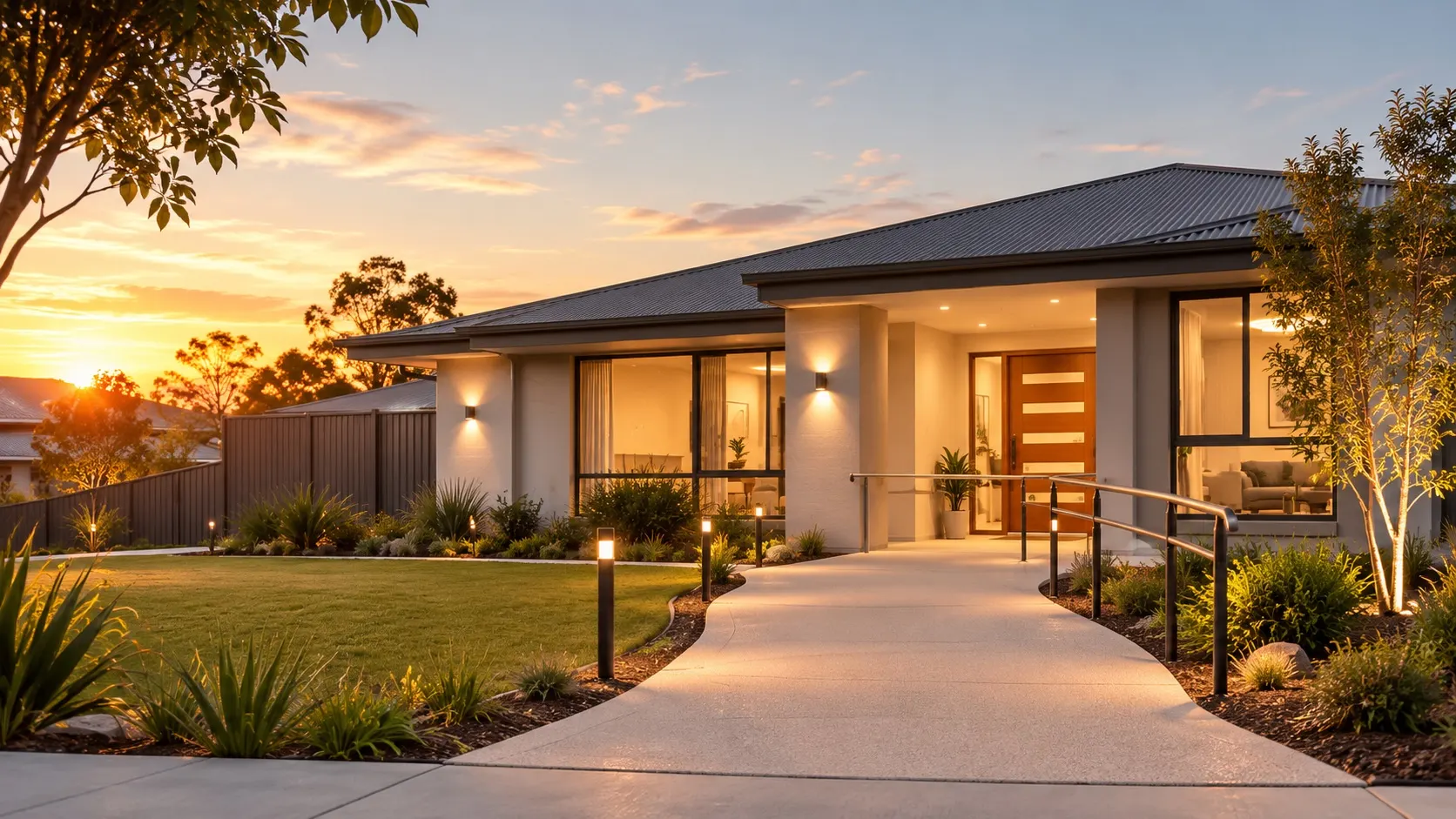
Types of SDA housing: apartments, villas, houses and group homes
By The Find My SDA Team · Reviewed by Bhav Singh, Licensed Estate Agent · Published 09 Aug 2026 · Updated 15 Sep 2026
Specialist Disability Accommodation comes in more than one shape. Two homes can both be SDA, and both built to the same design category, yet feel very different to live in because they are different building types. This guide explains the main types of SDA housing, how many people usually live in each, and how the building type shapes both your day-to-day life and your funding.
Building type is different from design category
It helps to keep two ideas apart. The design category, which is Improved Liveability, Fully Accessible, Robust or High Physical Support, describes how the home is built for your disability. The building type describes the shape of the dwelling itself, such as an apartment or a house. Your NDIS plan can name both.
The building type also affects funding, because the NDIS prices SDA partly on the type of dwelling and how many people it is designed for. You can read more in our guide on how SDA funding works.
Apartments
An SDA apartment is a self-contained unit, usually with its own entrance, kitchen and bathroom, in a building with other apartments. Some buildings mix SDA and ordinary apartments so residents live alongside the wider community.
Apartments suit people who want their own front door and a good degree of privacy, often with support that comes in as needed rather than staff on site around the clock.
Duplexes, villas and townhouses
These are self-contained homes for up to three residents, attached to other homes on the same title or strata, each with its own entry. This type can also be a self-contained granny flat on the same block as another home.
They offer a middle ground: your own home and privacy, with neighbours close by and, in some cases, shared support arranged nearby.
Houses
A stand-alone SDA house is a single dwelling on its own block, shared by two or three residents. Houses often suit people who want a garden, more space, or a quieter street.
Because a house can be built to any design category, you will find everything from an Improved Liveability home to a High Physical Support house with a ceiling hoist and provision for overnight support. Our guide on accessible home features explains what those features look like.
Group homes
A group home is a shared house with four or five long-term residents, each with their own bedroom, who share the common living spaces. Some group homes include a room for overnight on-site support, which can suit people with higher or overnight support needs.
The support you receive in a group home, most often Supported Independent Living (SIL), is funded separately from the SDA building itself.
Which type is right for me?
There is no single best type. The right home depends on your design category, how much support you need and when, whether you want to live alone or with others, and what is available in the area you want. Our page on how to choose an SDA provider walks through the questions worth asking.
The easiest way to see what these types look like in real life is to browse current vacancies. You can filter homes by suburb and category, and each listing shows the building type and how many people live there.
Common questions
What is the difference between an SDA house and a group home?
Under the NDIS SDA pricing, a house is a stand-alone home for two or three residents, and the SDA Rules define a group home as a house with four or five long-term residents. Both can be SDA.
How many people live in an SDA home?
It depends on the type. Apartments are for one or two residents, villas, duplexes and townhouses are for one to three, houses are for two or three, and group homes are for four or five. Each vacancy lists the exact setup for that home.
Does the building type change my funding?
Yes. The NDIS prices SDA partly on the building type and the number of residents it is designed for, alongside the design category and location. See how SDA funding works for more.
Sources
We check the facts in this guide against these official sources before it goes live.
This guide is general information only and is subject to change. It does not replace advice from your NDIS planner or support coordinator. The building type, design category and support arrangements for any particular home are confirmed on that home's enrolment, so always check the details of a specific vacancy.