
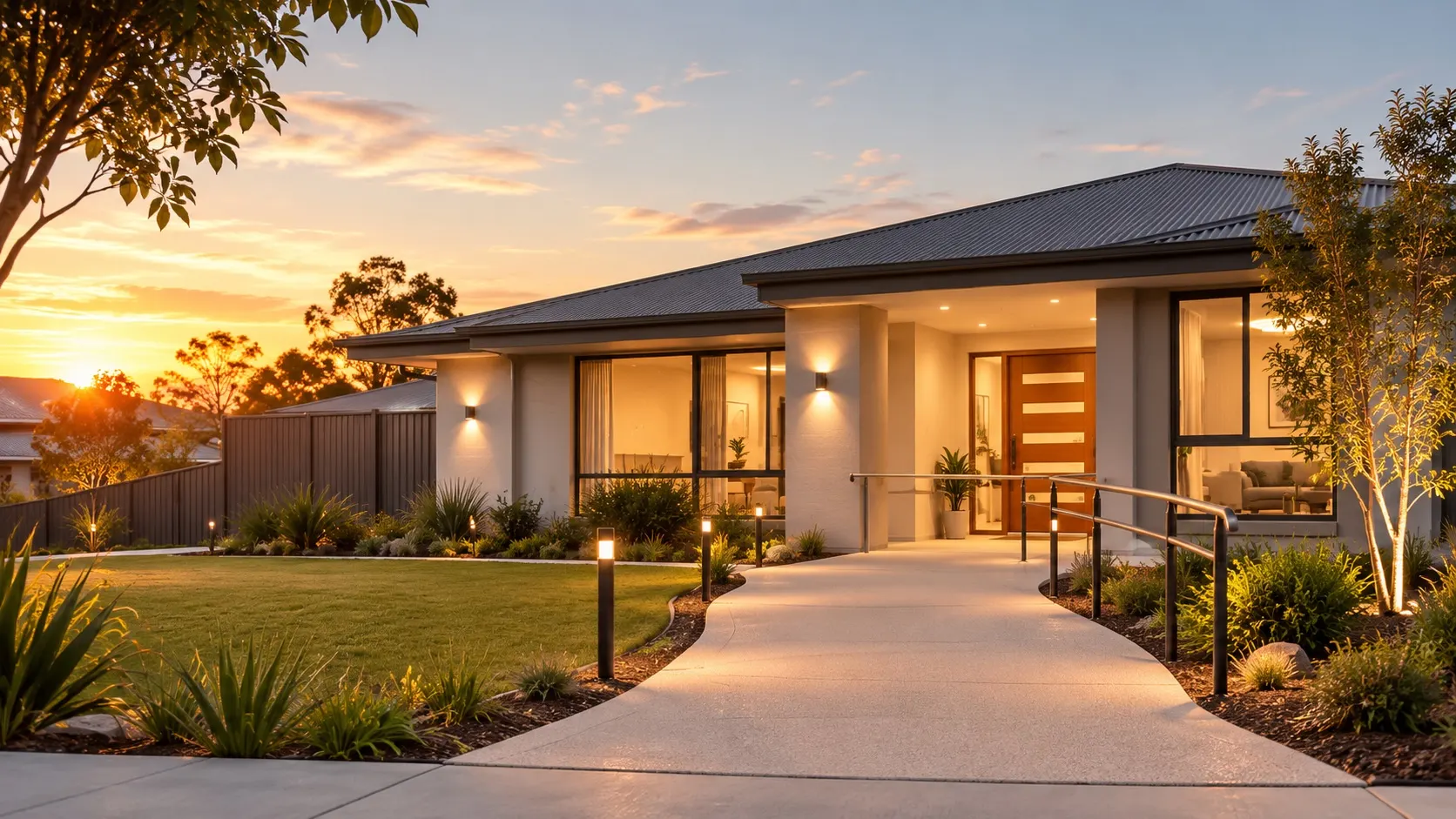
The four SDA design categories explained
By The Find My SDA Team · Reviewed by Bhav Singh, Licensed Estate Agent · Published 27 Jul 2026 · Updated 15 Sep 2026
New Specialist Disability Accommodation homes are built to one of four design categories under the NDIS SDA Design Standard. The SDA Rules also list a Basic category. The NDIA cannot set Basic as the category in your plan, but someone already living in a Basic home can sometimes be funded to stay there. Before a newly built home can be enrolled, an accredited SDA assessor who is independent of the provider must certify it meets the Design Standard. Your NDIS plan is usually funded for one category, so it helps to know what each one means before you start looking.
Improved Liveability
Housing with better physical access and extra features for people with sensory, intellectual or cognitive impairment. For example, walls and floors that are very easy to see, or living areas where support workers can easily see you.
Fully Accessible
For people with significant physical impairment. These homes have step-free access and layouts that support wheelchair use and safer mobility throughout the home.
Robust
A safer, more resilient built environment with stronger materials and layouts that reduce the risk of harm to the resident or others, while still feeling like a home.
The build also cuts down on repairs and maintenance. This category may suit people who need help managing complex and challenging behaviours.
High Physical Support
For participants with very high physical support needs. These homes are built to a higher specification, with ceiling-hoist provision, assistive-technology readiness and emergency power where required.
Which category am I funded for?
Your plan names the design category the NDIA will fund. Along with the design category, your plan names a building type and a location. When you contact providers about a vacancy, tell them all three.
Once you know them, you can browse homes built to that standard and enquire on the ones that suit you.
How the NDIA decides your category
To decide, the NDIA looks at your individual needs and at reports from allied health professionals, such as an occupational therapist. For example, it asks whether you need extra space around your bed, bathroom or kitchen, or whether your care needs call for particular features.
If your support needs change significantly, you may need a different type or category of SDA. A plan reassessment lets the NDIA look at your SDA supports again, for example if your functional capacity changes or you plan to relocate.
The four building types
Your plan names the building type the NDIA will fund. There are 4 building types: apartments; villas, duplexes and townhouses; houses; and group homes, which are houses with 4 or 5 residents. Our guide to types of SDA housing explains each one.
Living in a home with a different category
Your plan sets the most the NDIA will pay for your SDA. You can usually live in a home with a lower value than your plan.
Some providers may let you live in a higher-valued category or building type. The NDIA still only funds what is in your plan, so the provider may ask for more rent than your reasonable rent contribution. Any extra rent must be in your service agreement, and the provider has to give the NDIA evidence from a qualified property valuer that the extra rent is reasonable.
Common questions
How do I know which SDA category I am funded for?
Your NDIS plan names the design category. Your support coordinator or NDIS planner can confirm it if you are unsure.
Can one home suit more than one category?
A home can be certified under more than one design category, as long as its shared areas meet the requirements of every category it is enrolled under. Your plan sets the most the NDIA will pay, and the provider can only claim the price for how the home is enrolled, up to that amount.
Do I need an occupational therapist report?
The NDIS needs recent evidence from a treating health professional, such as an occupational therapist.
Does a higher design category mean I pay more rent?
The maximum reasonable rent contribution is worked out from the Disability Support Pension, the Pension Supplement and any Commonwealth Rent Assistance you get, not from the design category. For homes Find My SDA manages where the residents rent directly, we work out the contribution of a resident who does not share a bedroom as 25% of the basic rate of the Disability Support Pension plus 100% of Commonwealth Rent Assistance. Extra rent can come up if you choose a home valued higher than your plan.
Sources
We check the facts in this guide against these official sources before it goes live.
- NDIS - Specialist disability accommodation operational guideline
- NDIS (Specialist Disability Accommodation) Rules 2020
- NDIS Specialist Disability Accommodation Design Standard
- NDIS - SDA design standards (providers)
- NDIS Our Guidelines - What kind of specialist disability accommodation will we fund?
- NDIS - What is specialist disability accommodation (SDA)
- NDIS - SDA pricing arrangements